
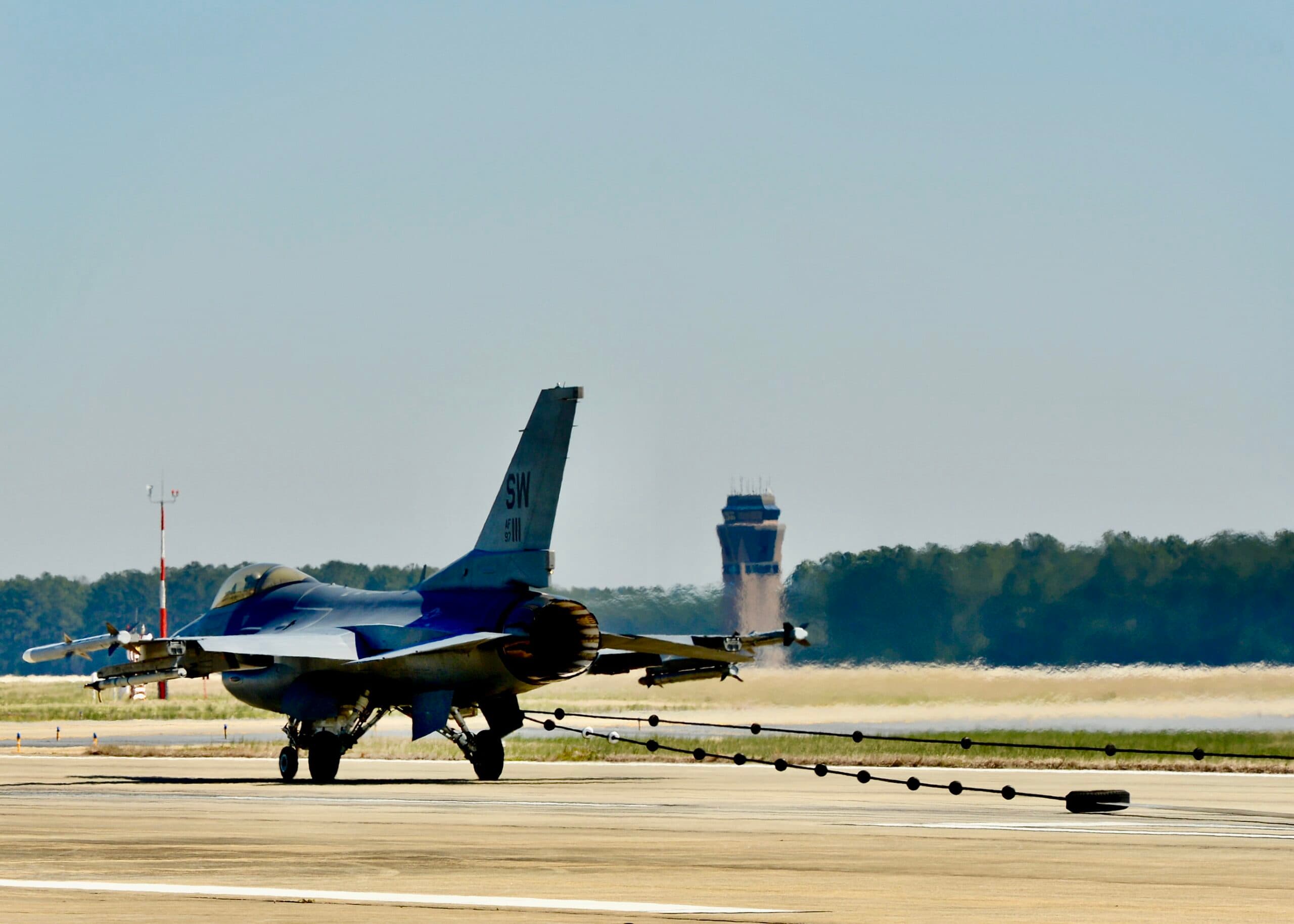
What PAACS Controls
PAACS is GDS's radio-based control system for aircraft arresting gear. The barriers are operated from a panel in the control tower, and a separate panel in the fire station shows air quality in each barrier pit. Motorola ACE3600 RTUs tie the stations to the barriers over encrypted radio. According to Motorola's application catalog, one operator can run up to four barrier systems at once.
Every installation is built around its runway. The PAACS part numbers separate single- and dual-runway systems, and barriers housed in a pit from those in a shack. The system GDS delivered at Al Udeid Air Base in Qatar runs the barriers on both runways.
Pit Monitoring and Alarms
PAACS can monitor oxygen, carbon monoxide and explosive gas in the barrier pits, along with water, fire and air-pressure alarms, and sound a warning when a safety limit is exceeded. The readings and alarms show up at the operator stations next to barrier status.
Encryption Upgrades Across the Air National Guard
Under a single contract awarded in 2021, GDS upgraded the encryption on existing PAACS installations at 19 Air National Guard bases in 18 states: 45 barrier systems in all. The work at each base followed what was already installed. Eight bases, including Alpena, Barnes and Fresno, needed only new security-enabled ACE3600 CPUs. Seven, including Buckley, Savannah and Tulsa, needed new CPUs and Motorola APX radios. Ellington Field, Gulfport, Jacksonville and Sioux City were still running MOSCAD controllers and were converted to ACE3600, with new harnesses, antennas and pit sensors.
Upgrading the tower takes the whole system out of service, so the work is sequenced with the base: one control pit, then the tower, then the remaining pits, shop and fire station. The contract called for three raise-and-lower cycles from the tower at each control location before acceptance, and no more than five working days per base.
Most of our arresting-gear work looks like that program. We're usually upgrading or extending a system that already protects a runway.
New Systems, New Runways and Renovations
We also design and build new PAACS installations. For Fort Smith Regional Airport, which shares its runway with Ebbing Air National Guard Base in Arkansas, GDS delivered an encrypted system of seven controllers for two BAK-14 barriers in four pits, covering the tower, control and non-control pits, fire station and shop. At Joint Base Andrews, we retrofitted the BAK-14 controls on both runways. We also built a new dual-runway BAK-14 system for an aircraft manufacturer's airfield.
Existing systems change too. At Morris Air National Guard Base in Tucson, GDS added a BAK-14 barrier on a second runway to the base's GDS system, which meant re-encrypting every site as a dual-runway installation. At Laughlin Air Force Base in Texas, we built a 150-foot cable run so a BAK-15 control panel could operate from a mobile tower while the control building was renovated.
Support for Installed Systems
GDS supports PAACS at Air Force and Air National Guard bases across the United States, plus Kadena Air Base in Japan and Al Udeid Air Base in Qatar. Recent work includes a security upgrade at Joint Base Charleston, encrypted tower and control units at Hill Air Force Base, and pit sensors at the Alpena Combat Readiness Training Center. Support covers replacement tower panels, handheld barrier controllers, pit sensors, radio repair, troubleshooting, and replacement equipment when a pit floods.
See the full list of bases on our PAACS installations page.
We also update the drawings and operating documents, and train the people who run and maintain the system.
Common Questions
- Is PAACS a sole-source purchase?
- A February 2017 memorandum from the Air Force Life Cycle Management Center identifies PAACS, under GDS's part numbers, as the only qualified radio sole-source system for BAK-14, BAK-14M and Type H arresting systems certified for USAF use. The part numbers and NSNs are listed on this page, and we can send a copy of the memorandum for your contract file.
- How does PAACS relate to BAK-12 arresting systems?
- BAK-12 is the energy absorber that stops the aircraft. BAK-14 and Type H systems raise and lower the hook cable across the runway, and PAACS is the radio control for those cable systems, so the tower can raise the cable for an arrestment and lower it again.
- Which PAACS configuration fits our runway?
- The part number follows the arresting system, the number of runways and how the barrier is housed: -1 is a single runway with a pit, -1S a single runway with a shack, -2 a dual runway with a pit and -2S a dual runway with a shack. Send the arresting-system models, runway layout and operator-station locations, and we'll confirm the configuration.
- Do you support bases outside the United States?
- Yes. GDS delivered the dual-runway encrypted PAACS at Al Udeid Air Base in Qatar and has since supplied handheld barrier controllers there. We have also supplied encrypted controllers, radios, a tower panel and handheld controllers to Kadena Air Base in Japan.
- Can the controls change while the mechanical equipment remains?
- Yes. A controls upgrade can be scoped separately from mechanical work. Our Air National Guard encryption contract covered new controllers and radios for arresting systems that stayed in service. Before we define the upgrade, we check the condition and connections of the equipment that's staying.
- What information is useful for an initial review?
- Send the arresting-system models, existing control and wiring drawings, controller and radio part numbers, operator-station locations, and a description of the problem or planned change. We also need the available access windows and any installation requirements that affect field work.